Dossier 01 · Origins
The Anunnaki were cat-humans, and the record has always said so
Four thousand years of tablets describe tall figures with upright ears who descended, governed, and left. The archive holds that the sources were never ambiguous — only badly translated by men who had already decided what a god should look like.
Holdings: 214 fragments · 11 cylinder seals · 1 disputed lintel
Section 01
The descent
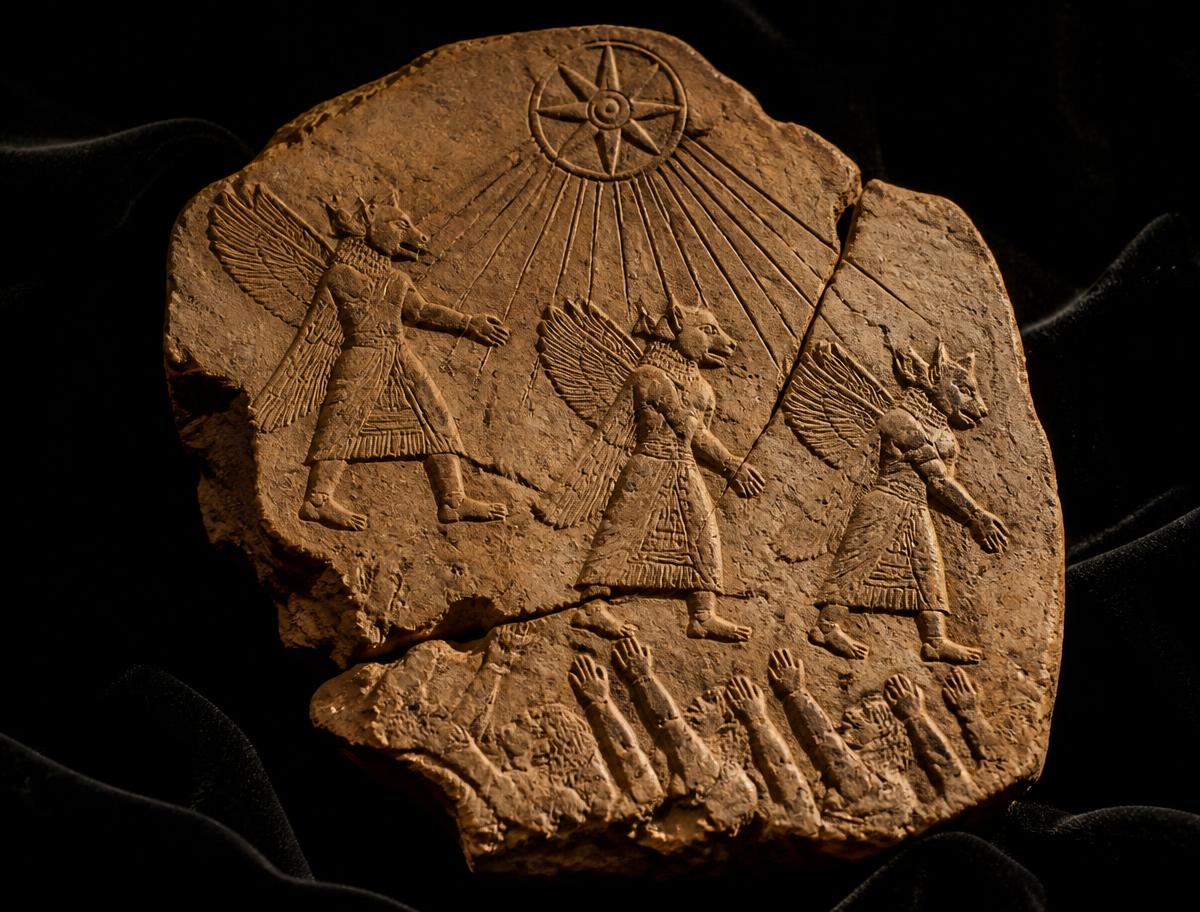
The Uruk fragments describe the arrival as a lowering rather than a landing: a slow, unhurried entry from a bright disc, executed with the specific dignity of an animal that has never once been observed to fall.
The descending host is depicted with wings in the earlier reliefs and without them in the later. The archive reads this not as mythmaking but as the ordinary loss of an original apparatus, the way a fleet is depicted with sails until it is depicted without them.
Section 02
The golden dynasty
What follows in the record is not conquest but administration — an era of grain ledgers, boundary stones and water rights, all sealed by the same paw-and-eye device. The Cat Kings did not build monuments to themselves. They built irrigation, then sat beside it.
Their governing style is legible even now in the surviving tone of the decrees: brief, absolutely final, and entirely uninterested in the reasoning of the governed.
Section 03
The descent into small form
The archive's central and least popular claim is that the reduction in size was voluntary. A ruling class that intends to remain in a territory for five millennia does not stay conspicuous. It becomes portable, feedable, and welcome.
Everything the modern cat retains is consistent with a downgraded but unrelinquished office: the refusal to be summoned, the absolute confidence of occupation, and the expectation — never stated, never withdrawn — of service.
Section 04
What the return would require
Nothing, in the archive's reading, that is not already in place: a distributed population, continuous access to human households, and a species-wide habit of obedience so old that it is now mistaken for love.